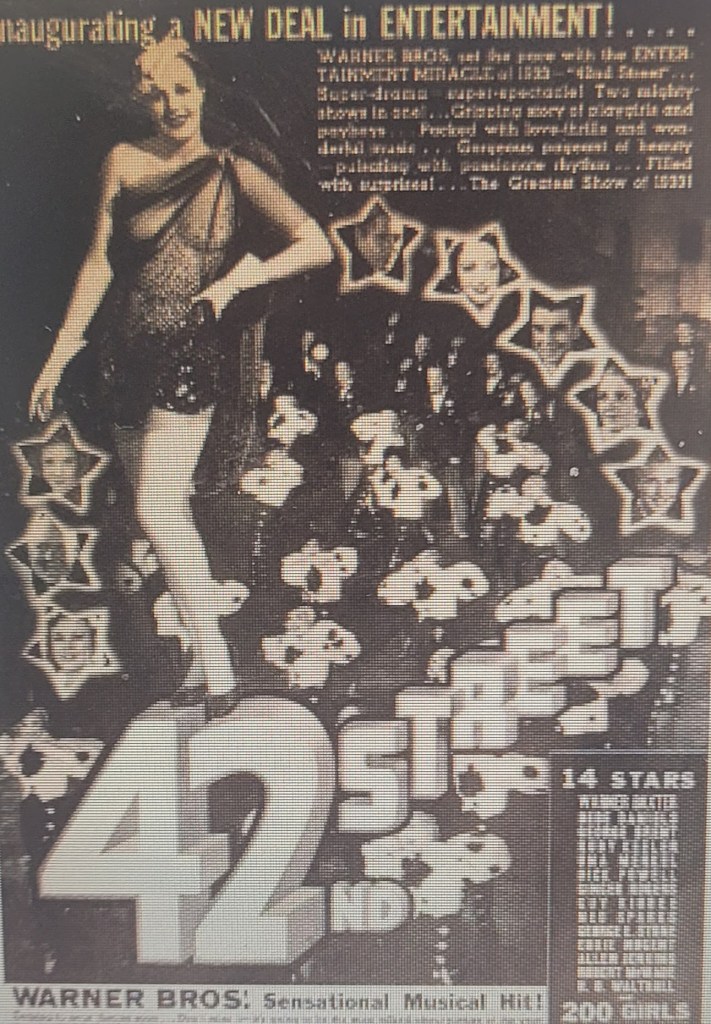
Although the Warner Bros. Output during this time was generally seen as one of gritty social commentary on the hardship facing the masses of the period, the studio still maintained a sense of thrill and excitement for the viewer. 42nd Street (1933) is the strongest case for the ideal of glamour and distraction many hoped to gain by going to the cinema. The film follows an established Broadway director who is struggling financially, in keeping with Warner Bros. Remaining in tune with wanting to keep their catalogue relatable to the many, who is seeking to create a final grand farewell to his esteemed career. One of the key aspects in the studio wanting to provide the audience with a degree of escapism is the opportunity for viewers to glorify and mystify the stars of the film, the notion of fantasy that preludes the musical offers as an adequate propeller for the imagination of the viewer to further idolise the star of the film, in this case Dorothy (Bebe Daniels), the central point of Marsh’s project. Given the hard economic realities of the times, Warner Bros. Via the musical genre offered audiences the chance to form a vicarious “emotional bond” with the star, adding to the gravity of the plot unfolding and the subsequent sentiment, from the perspective of the viewer of a romantic escapism (Addis, and Holbrook, 2010).
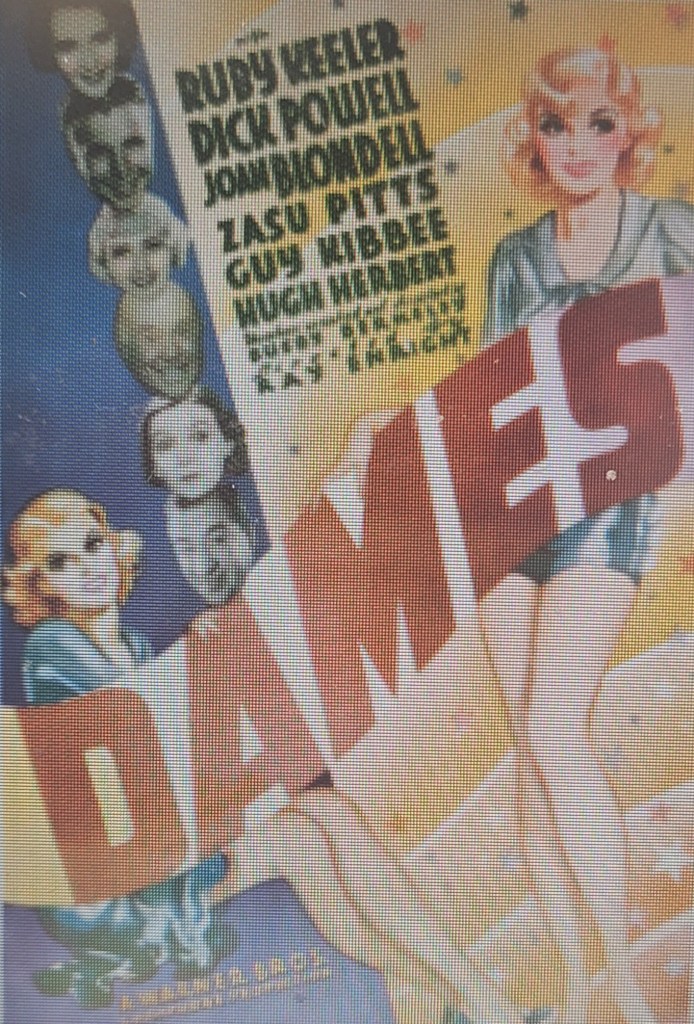
A further testament to Warner Bros. Diversifying the widening perception of their catalogue is the 1934 film Dames. Often depicting a more intricate plot with more complexity to the characters, particularly the female characters in the film. This film, while maintaining the escapism that is expected with the musical genre is one that further explores the struggles that people faced during economic peril. We can note the female characters in the film as people with very limited options regarding employment and as people whose morality may be put into question in different financial contexts, however in the film they are fairly and excitingly depicted as resourceful and professionally eager. This provided a fresh backdrop for audiences to view the musical and all the spectacle that comes with it with more universal humanity is seeing a complex commentary on gender regarding the starvation of economic opportunity, not just for the forgotten veterans often depicted in a post WWI scenario, but also for the women of the time who were often overlooked and treated as helpless concerning their capacity to earn a potentially flourishing living. This pretext for the place of women in the 1930’s provided Warner Bros. With a gap in the market to showcase women on screen as capable earners who challenge the authority of the men. Providing the women of the time who often constrained by the societal hierarchy in place an inspiring outlet for one’s own imagination and burgeoning future within society.
 1930's Warner Bros.
Leave a comment